You just served a plate of food that took three weeks to perfect. The plating is immaculate. The seasoning is balanced. It's genuinely the best thing you've cooked in months.
The customer eats it. Doesn't say much. Leaves.
Three days later, you check your Google reviews. "Amazing! 5 stars!" Great. But what made it amazing? The flavors? The presentation? The service? The ambiance? Google's 300-character box doesn't tell you.
A week later, a different customer leaves a 3-star review on Yelp: "Good but service was slow." Now you're stressed. Was it slow? Was it perceived as slow? Which table? Which server? You have no context.
This is the restaurant feedback problem. You're flying blind, collecting reviews from platforms that weren't built for hospitality, getting data that's too public to be honest and too vague to be actionable.
Here's what works instead: QR codes in strategic places, a branded feedback form (not Google Forms), real data collection, and a system to actually act on it.

Let me be direct: relying on Google/Yelp for restaurant feedback is a losing strategy. Here's why.
They're public. Your customer knows their review is visible to thousands of strangers. They self-censor. They amplify emotions (amazing or terrible) because neutral doesn't get attention. You don't get honest feedback — you get performance.
They attract the extremes. Data shows that people who review on Google and Yelp are either delighted or furious. The 80% of customers who had a fine, forgettable meal? They don't bother. You're hearing only the outliers.
You can't respond privately. If someone complains about cold food, you can't just comp a dessert without performing it in public. A private response to a public complaint feels weird. You're managing reputation instead of solving problems.
The data is too coarse. "Great food, slow service" tells you two contradictory things happened, but not how to fix either. Which course was slow? Which server? Which table? Was it actually slow, or did they perceive it as slow because they were waiting for a reservation? You don't know.
You have no trend data. If Friday nights are slow and Tuesday mornings are fast, you won't see it in Google reviews. You'll see five 2-stars on Friday (slow service) and assume it's a problem. You need volume, consistency, and time-based data.
The better approach: give customers a private, frictionless way to tell you the truth. Right at the moment of the experience.
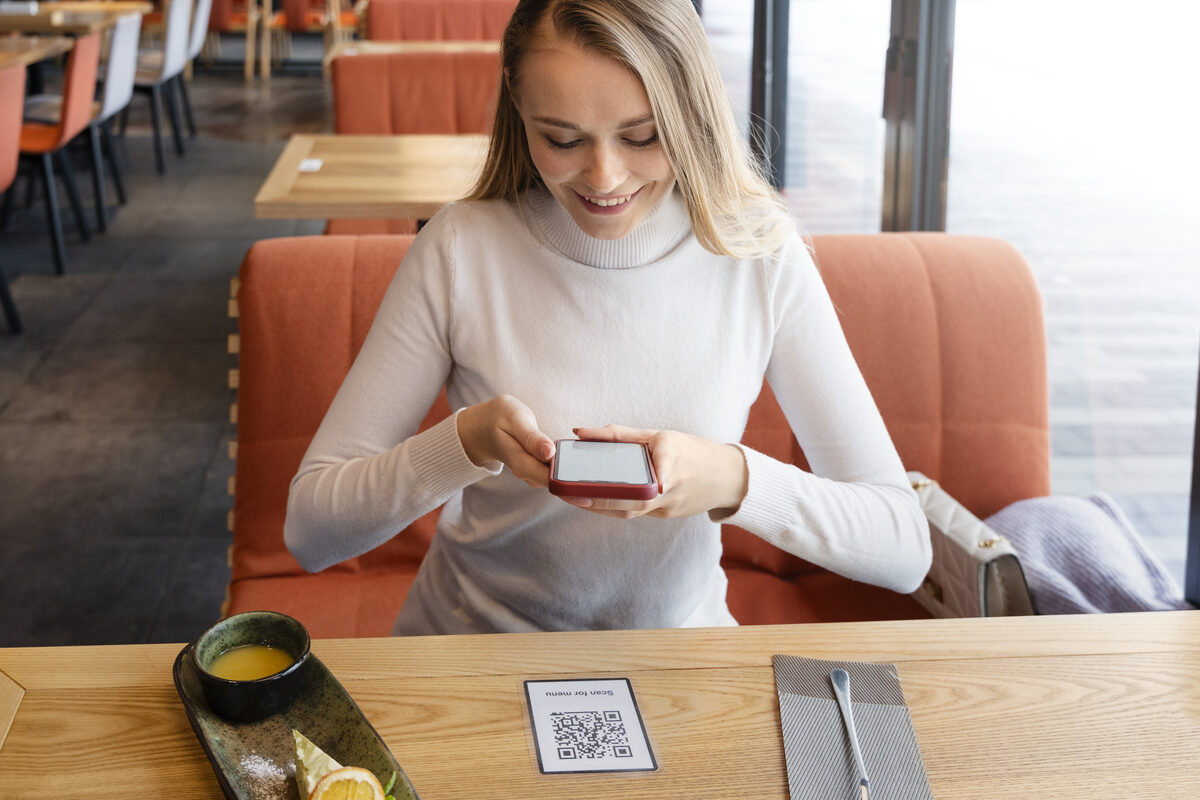
QR codes work for restaurants because they're fast, scannable, and don't require the customer to know your website or do research. You just point at a code and tell them "let us know what you think."
Table tents (best): A small stand on the table with a QR code and friendly text: "Was everything perfect? Let us know what we could improve." This hits customers right after they've eaten, while memory is fresh. Response rate on table tents runs 8-15%, which is absurdly high for any feedback channel.
Receipt footer: Print a QR code on the receipt: "Help us improve — scan here." This gets people immediately after paying. They're in a good mood (full, leaving). Some will scan. Less friction than sitting through a waiter interruption.
Restroom doors/mirrors: People are trapped there for 30 seconds. A QR on the mirror with "What could we do better?" gets feedback. Weird placement, but it works.
Entrance/exit (low priority): "Can't find your reservation? Feedback?". Low response rate, but you'll catch people before they leave angry.
Staff uniforms (advanced): Some restaurants print QR codes on staff shirts: "Had a great experience? Mention our server by name." This gamifies positive feedback and helps you identify your best staff.
This is where most restaurants get it wrong. They copy the Yelp template: "Rate us 1-5, tell us what you liked and didn't like, name, email, phone number."
Wrong. That's six fields. Most people close after field two.
Here's the minimal form that actually works:
Field 1: Rating (1-5 stars). Required. Fast. Shows you the overall sentiment.
Field 2: What could we do better? (optional text). One text box. Open-ended. This is where the signal is. You don't ask "what did you like" — you only want to hear problems.
Field 3: Email (optional). Only ask this. Not name, not phone. You want to follow up on problems, not cold-call someone. Email is enough.
Three fields. Most submissions take 30 seconds. Response rate is 3-4x higher than the eight-field questionnaire.
Optional advanced fields (add only if you'll actually use them):
Which server? Dropdown list of staff names. Great for positive feedback attribution. Bad idea if you want honest criticism — people hold back if they have to name the person.
What did you order? Optional text. Helps you track which menu items get complaints. Over time, you'll see patterns: everyone complains the fish is overcooked, nobody can find vegetarian options, the new pasta is a hit.
Don't ask "How was your experience?" (everyone says fine). Don't ask "Would you recommend us?" (NPS is for SaaS, not food). Don't ask for demographic data. You're not running a survey. You're collecting problems so you can fix them.
Here's real data from restaurants using QR codes + branded forms:
Table tent placement: 8-15% scan rate. Of those who scan, 60-70% submit feedback. Net: 5-10% of customers give you feedback. That's massive. Google reviews average 0.5-1%.
Receipt footer: 3-5% scan rate. Lower engagement because they're leaving. Of those who scan, 40-50% submit. Net: 1-2% of customers.
Rating distribution: 40-45% five-star, 30-35% four-star, 15-20% three-star, 5-10% one-two star. This is the honest distribution. You're not getting the extreme skew of public reviews.
Sentiment in text: Most feedback is specific and actionable. "Cold fries" is better than "food was bad." "Too loud to hear my date" beats "noisy atmosphere." "Took 20 minutes for water refill" is a management fix. You know exactly what to change.
Here's a psychology insight that works: a customer giving feedback through your branded form feels different than posting publicly to Google.
Google = performance, judgment, reputation.
Branded form = a private conversation with the restaurant owner.
The same customer who'd give you a 3-star Yelp review ("good but overpriced") will actually tell you the truth on your form: "The portion size is smaller than a year ago but the price is the same. If you upped portions back, I'd be a regular." That's actionable. That's also a conversation, not a score.
Customers also grade on a curve. Public reviews are competitive — "is this better or worse than other restaurants?" Private feedback is conversational — "here's what I noticed." Less pressure to be extreme.
If you have three locations, you need consolidated feedback, not three separate forms.
Use one feedback form with a location dropdown. In your inbox, tag feedback by location so you can spot patterns:
Location A: Everyone complains about parking. Fix the parking signage.
Location B: Friday nights are too loud. Maybe add sound dampening or separate quieter seating areas.
Location C: Breakfast menu is a hit, lunch is boring. Double down on breakfast, rework lunch.
You'd never see these patterns in fragmented review systems. Consolidated feedback reveals macro trends that drive business decisions.
Track feedback by season and you'll see your customer base changes:
Summer: Tourist-heavy. They complain about prices. They want outdoor seating. They rave about ambiance.
Fall: Back-to-business crowd. They want efficiency. They're less forgiving of slow service.
Winter holidays: Family groups. They book early. They complain about noise (too many kids). They appreciate kid-friendly tweaks.
Spring: Date night season. Ambiance matters. They complain about wobbly tables. They love romantic lighting.
If you see a sudden spike in parking complaints in March, it's not a new problem — it's ski season starting. Not actionable. But if you see "can't hear my date" spike in February, that's actionable: the background music is too loud.
Collecting feedback means nothing if you ignore it. Here's the system:
Daily review (5 minutes): Read new feedback each morning. Spot anything urgent? A customer got sick? A server was rude? Talk to the team immediately.
Weekly triage (15 minutes): Tag feedback. Count themes. Is there a pattern?
Monthly analysis (30 minutes): Trends. What's improving? What's getting worse? What should change?
Quarterly action: What's the #1 complaint this quarter? Fix it. What's the #1 compliment? Double down.
This is how you improve. Not by chasing Google ratings. By listening to your customers and actually changing things based on what they tell you.
AppTriage makes restaurant feedback management simple. Generate a QR code for your form, customize it with your branding, and collect honest feedback from your customers. Get your first form set up free.